

Right after the 12th results, almost everyone around you turns into a career counsellor. Your uncle says “do engineering,” a neighbour swears by medicine, and a friend is already filling out the CUET form. In the middle of all that noise, you quietly wonder: what if I’m more curious about how businesses actually run?
If that sounds like you, you’re in the right place. Business management is one of the most flexible fields you can step into after Class 12. It doesn’t matter whether you studied Science, Commerce or Humanities. It opens doors to corporate jobs, startups, family businesses, marketing, finance, and even a venture of your own.
In this guide, we’ll walk through the best business management courses after 12th, who can apply, which entrance exams matter, what careers they lead to, and how to pick a course without regret. Let’s make this decision a little less stressful.
Why Choose Business Management After 12th?
Before comparing courses, it helps to know why so many students are drawn to this field.
It’s genuinely flexible. A management graduate can work in marketing, HR, operations, finance, sales, consulting or entrepreneurship. You aren’t locked into one narrow job for life.
It builds skills that travel everywhere. Communication, leadership, negotiation, decision-making, teamwork and problem-solving matter in every industry. A hospital, a software company and a local bakery all need people who can manage resources and think clearly.
It’s a strong foundation for higher studies. Many students use a bachelor’s degree in management as the first step towards an MBA, PGDM or a specialised master’s programme.
It suits the startup era. India’s startup culture keeps growing, and people who understand finance, marketing and operations together are in demand, whether they’re hired or building their own brand.
That said, business management isn’t magic. It rewards curiosity, effort and practical exposure. A degree opens the door, but what you do inside the classroom and outside it decides how far you go.
Who Can Apply? Eligibility in Simple Words
The good news is that eligibility is fairly relaxed.
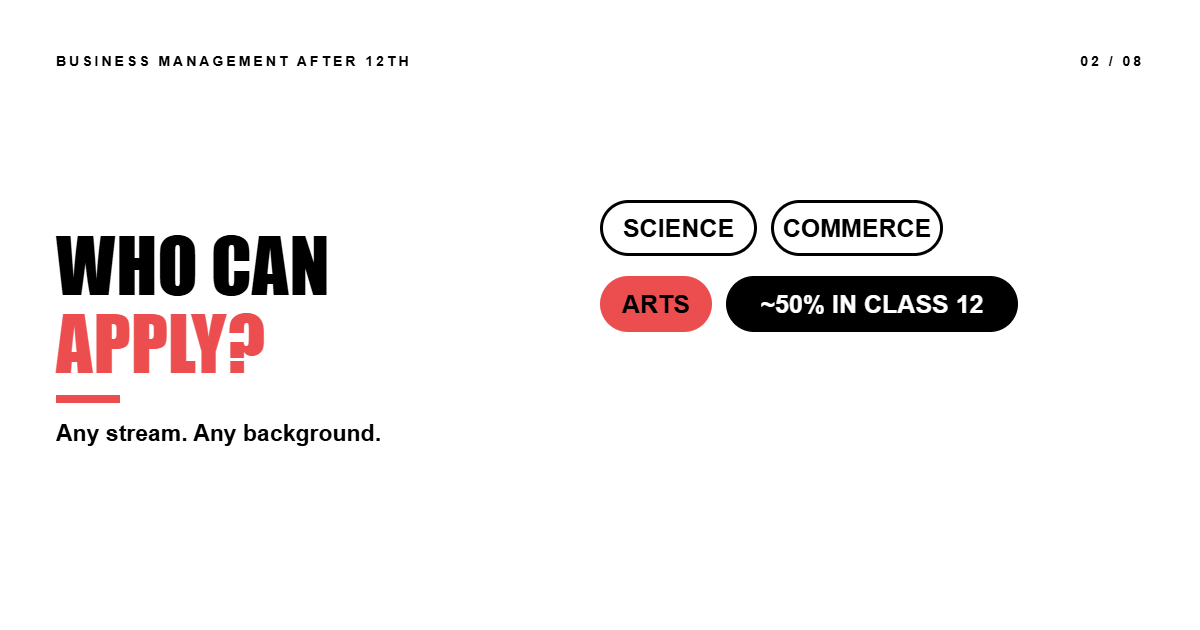
- Stream: Most colleges accept students from any stream: Commerce, Science or Arts. Some may prefer Maths or Economics in Class 12, but it’s rarely mandatory.
- Marks: Many institutions ask for a minimum of around 50% in Class 12 (usually a little relaxed for reserved categories). Top universities often expect much higher scores or strong entrance results.
- Age and other criteria: These vary by college, so always check the official admission page before applying.
Because requirements change from year to year, treat any number you read online (including here) as a starting point and confirm it directly with the college.
Top Business Management Courses After 12th
Here are the main options, explained the way a friendly senior would explain them.
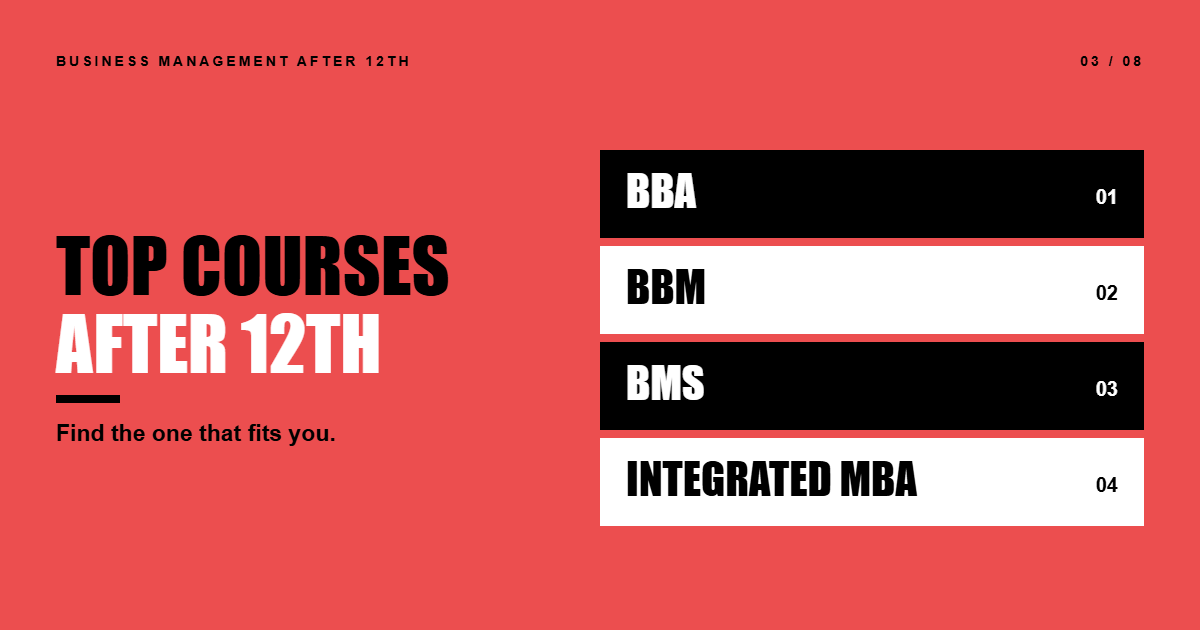
1. BBA (Bachelor of Business Administration)
This is the most popular choice, and for good reason. BBA is typically a three-year undergraduate programme (some universities offer a four-year honours version) that covers the basics of marketing, finance, HR, accounting, business law, economics and operations.
Best for: students who want a well-rounded introduction to business and a clear path to an MBA later.
2. BBM (Bachelor of Business Management)
BBM is very similar to BBA. In fact, many colleges treat them almost the same. The difference is usually in naming and, sometimes, in how much emphasis is placed on management theory versus practical business tools.
Best for: students who want a strong management foundation and don’t mind which of the two names appears on the degree, as long as the curriculum and college are good.
3. BMS (Bachelor of Management Studies)
BMS is especially popular in some regions and is often offered by well-known colleges under universities such as Mumbai University. It tends to be a bit more structured and academically intensive, with a mix of management subjects, quantitative methods and case studies.
Best for: students who enjoy analytical thinking and like a slightly more rigorous academic structure.
4. Integrated MBA (IPM)
If you already know you want an MBA, an integrated programme lets you skip the separate entrance process later. These are typically five-year programmes combining a bachelor’s and master’s in management. Some of the best-known ones come from top IIMs and leading universities, and admission is competitive.
Best for: focused, determined students who are ready to prepare seriously for entrance exams right after Class 12.
5. BBA with Specialisations
Many colleges now offer BBA programmes with a clear focus, such as:
- Digital Marketing
- Entrepreneurship and Startups
- International Business
- Finance and Banking
- Business Analytics
- Human Resource Management
- Event and Hospitality Management
These give you an early edge because you start building specialised skills from the first year itself.
Best for: students who already have a rough idea of the industry they want to enter.
6. B.Com with Management Electives
If you come from a Commerce background and like numbers, a B.Com programme with management or finance electives can be a smart middle path. You get strong accounting and taxation knowledge, plus enough management exposure to move into an MBA later.
Best for: students who want a solid commerce base without fully committing to a pure management degree.
7. Diploma and Certificate Courses
Not everyone wants a three-year commitment right away, and that’s perfectly fine. Short-term diplomas and certificates in areas like business management, digital marketing, financial modelling, data analytics or entrepreneurship can be taken alongside a degree or as a quick skill boost.
Best for: students who want practical, job-ready skills quickly, or those who want to test the waters before choosing a longer programme.
Entrance Exams You Should Know About
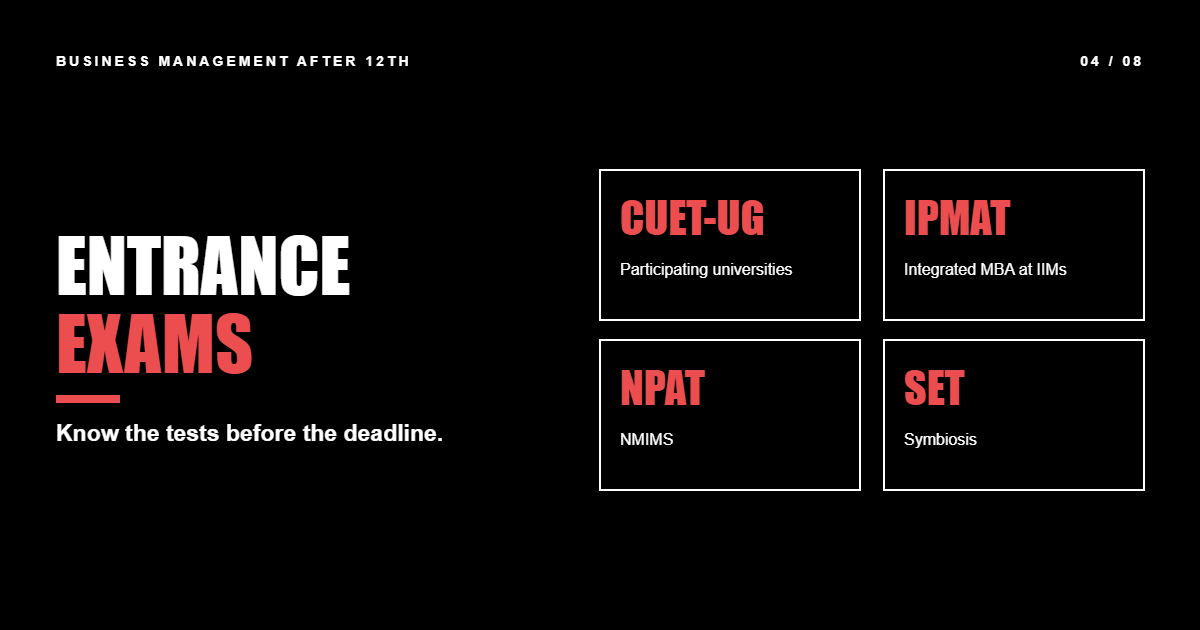
Some colleges admit students based on Class 12 marks alone, but many top institutions use entrance exams. Here are some commonly accepted ones:
- CUET-UG: Used by many central and participating universities.
- IPMAT: For integrated management programmes at institutes like IIM Indore and IIM Rohtak.
- NPAT: Conducted for admission to NMIMS programmes.
- SET (Symbiosis Entrance Test): For Symbiosis institutes.
- Other university-level and state-level tests: Many private universities run their own entrance tests or interviews.
Exam names, patterns and dates change often. Check each college’s official website for the latest details well before the application window opens.
Popular Specialisations Within Management
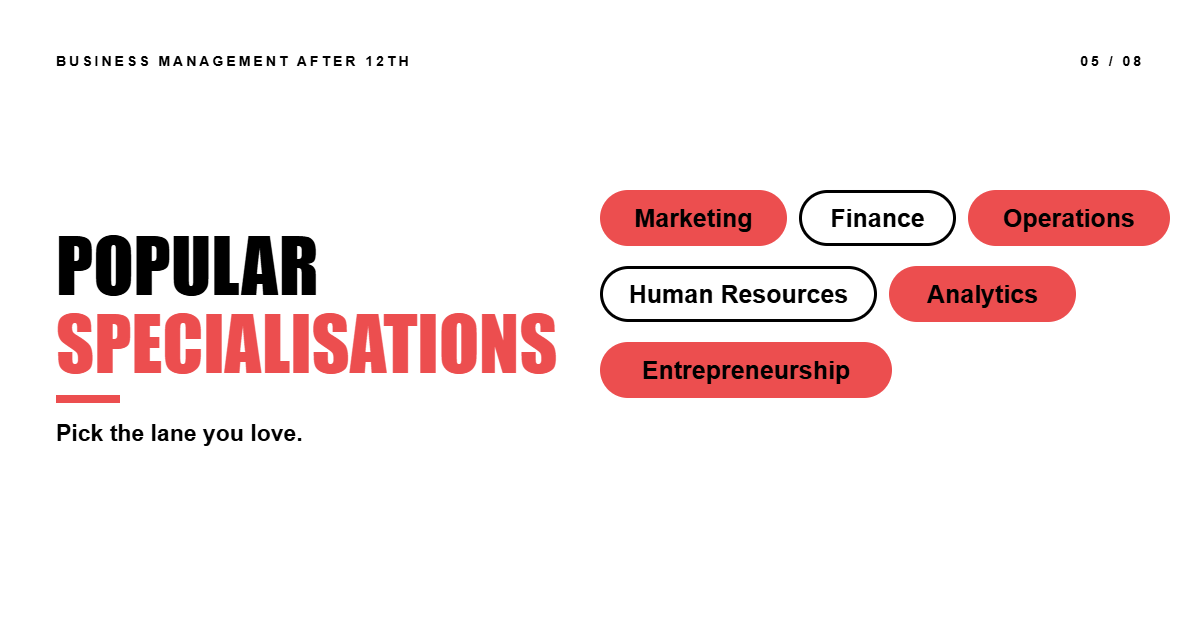
Even after you choose a course, you’ll usually pick a focus area as you move ahead. Here’s a quick look at what each one means in real life.
Marketing: Understanding customers, building brands, running campaigns and driving sales. If you love creativity combined with data, this is exciting.
Finance: Budgeting, investments, banking and financial planning. Great for students who enjoy numbers and logical thinking.
Human Resources: Hiring, training, employee engagement and workplace culture. Perfect for people-oriented students.
Operations and Supply Chain: Making sure products and services are delivered efficiently, from raw materials to the customer’s doorstep.
Entrepreneurship: Learning how to start, fund and scale a business from scratch.
Business Analytics: Using data to make smarter business decisions. This is one of the fastest-growing areas right now.
Career Options After a Business Management Course
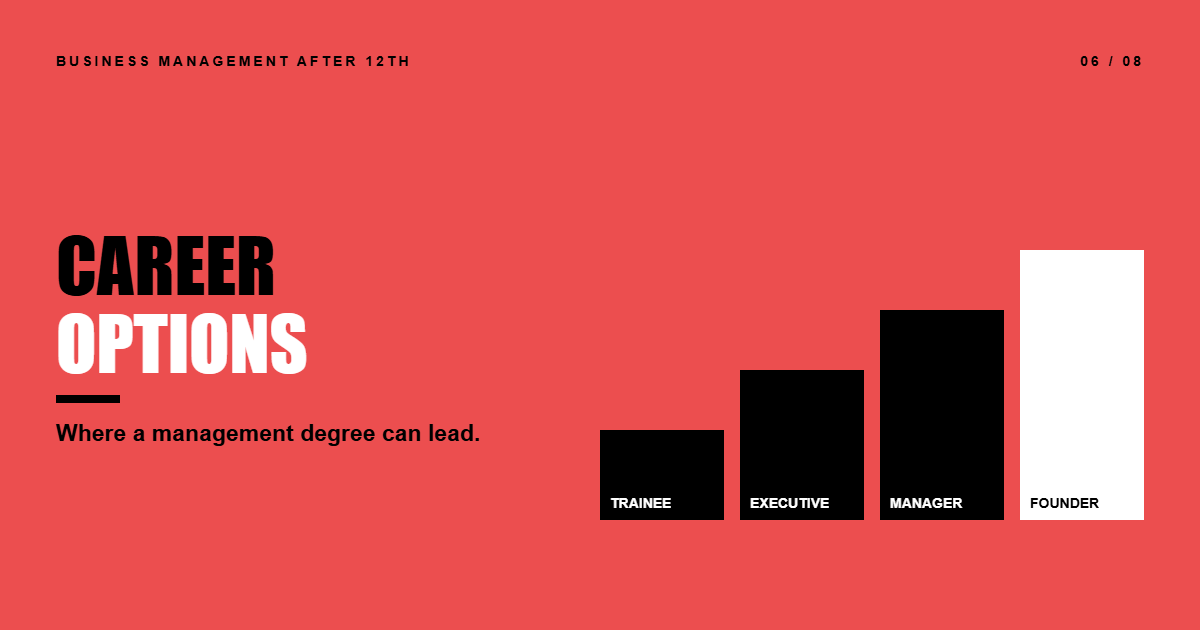
What can you actually do after graduating? Quite a lot. Common roles include:
- Marketing Executive or Brand Executive
- Digital Marketing Specialist
- Business Development Executive
- HR Executive or Recruiter
- Operations Executive
- Financial or Business Analyst
- Sales Manager (after some experience)
- Management Trainee in large companies
- Entrepreneur or Startup Founder
- Consultant (usually after higher studies and experience)
Salaries differ widely depending on the college, your skills, the city, the industry and your internships. Instead of chasing a number, focus on building a profile employers can’t ignore.
Skills That Make You Stand Out
A degree alone rarely does the job. These skills make a real difference:
- Communication: Speaking and writing clearly, in English and, where relevant, your regional language.
- Digital skills: Social media, SEO, analytics and basic tools like Excel and Canva are valuable almost everywhere.
- Critical thinking: Looking at a problem from several angles before deciding.
- Leadership and teamwork: Group projects, college clubs and event teams are great practice.
- Adaptability: Businesses change fast, and so should you.
How to Choose the Right Course (Without Overthinking)
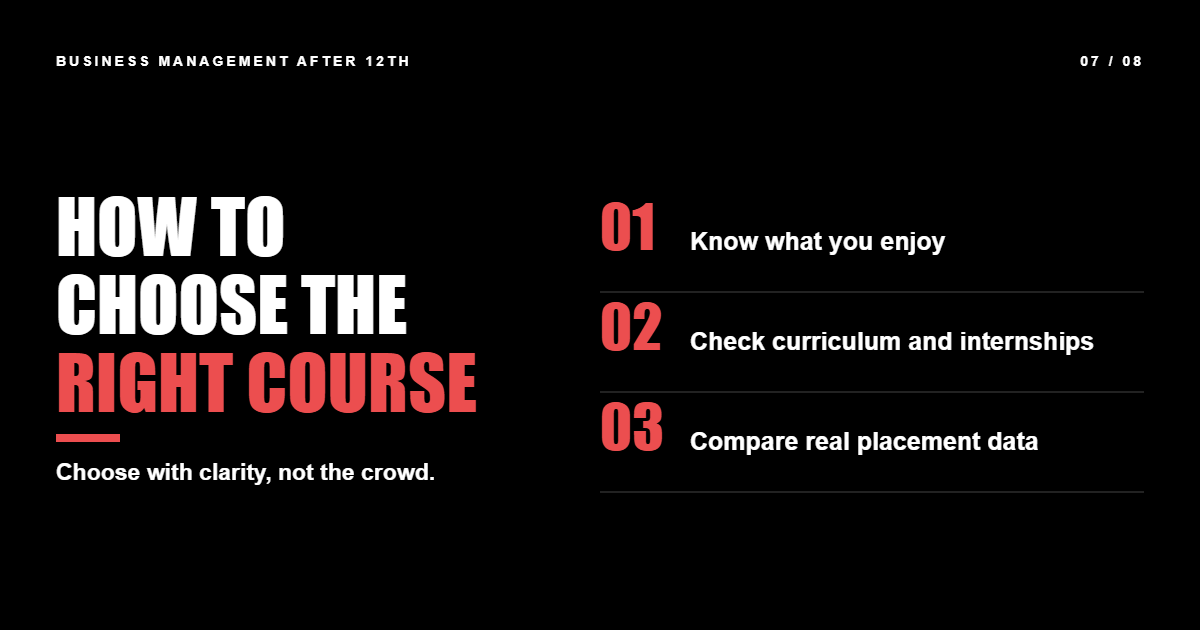
Here’s a simple way to make your decision.
Start with yourself. Ask what you actually enjoy. Do you like talking to people, working with numbers, creating content, or solving puzzles? Your answer points you towards a specialisation.
Decide your timeline. Do you want to start earning in three years, or are you comfortable studying for five? An integrated MBA suits the second type. A BBA or BMS plus a later MBA suits the first.
Look beyond the brochure. Check the curriculum, faculty background, industry tie-ups, internship support and placement records. Talk to current students or alumni if you can. Their honest feedback is worth more than any glossy advertisement.
Check accreditation and recognition. Make sure the college is recognised by the relevant university or regulatory body, and that the degree is valid for higher studies and jobs.
Consider your budget. Fees vary hugely between government, aided and private institutions. Factor in living costs, travel and possible education loans, and don’t ignore scholarships.
Prioritise practical exposure. Internships, live projects, workshops, case studies and industry visits teach you what textbooks can’t.
Common Mistakes Students Make
A few traps are worth avoiding:
- Following the crowd. Just because your friends chose a course doesn’t mean it fits you.
- Choosing only by college name. A famous name helps, but your own skills and effort matter more over time.
- Ignoring practical learning. Marks matter, but experience is what sets you apart in interviews.
- Believing every placement claim. Ask for real data: how many students were placed, in which roles and at what range.
- Waiting too long. Admissions and entrance exam deadlines come around quickly, so start your research early.
Frequently Asked Questions
Which is better after 12th: BBA or B.Com? It depends on your goals. BBA is more management-focused, while B.Com is stronger in accounting, taxation and finance. If you want to move into an MBA or a business role quickly, BBA is a natural fit. If you enjoy numbers and plan to pursue professional courses like CA, B.Com may suit you better.
Can I do business management after 12th Science or Arts? Yes. Most colleges accept students from any stream. Your interest and effort matter more than your Class 12 subjects.
Is an entrance exam compulsory for BBA or BMS? Not always. Many colleges admit students based on Class 12 marks, while others use entrance exams or interviews. Top institutions usually have an entrance test.
Is BBA enough, or do I need an MBA too? BBA can get you entry-level jobs on its own. Many students still pursue an MBA later for senior roles, a career switch or a higher salary range. It’s your choice, not a rule.
Are online or short-term management courses worth it? They can be, especially as add-ons. Choose programmes from reputed institutions or platforms, and look for practical projects rather than just certificates.
What is the scope of business management in India? The scope is broad, as nearly every industry needs managers, marketers, analysts and entrepreneurs. Your outcomes depend on your skills, internships and consistency.
Final Thoughts: Your Career Is More Than a Course Name
Choosing among the many business management courses after 12th can feel overwhelming, but you don’t need a perfect answer today. You need an informed one. Understand your interests, compare a few good colleges, talk to people already in the field, and pick the programme that matches your goals and your budget.
Remember, the course is only the beginning. The students who grow fastest are the ones who stay curious, take internships seriously, learn new skills and aren’t afraid to start small.
If you’re still unsure which path fits you best, take the time to speak to a mentor or a career counsellor, and visit the campuses you’re considering. A little effort now can save you years of second-guessing later.
Your future in business starts with one smart decision. Make it count.
Want personalised guidance on choosing the right business management course? Get in touch with our team today and take the first confident step towards your career.

Leave A Comment